Who Was Delilah?

Who Was Delilah?... hero image

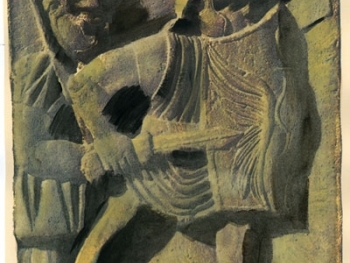
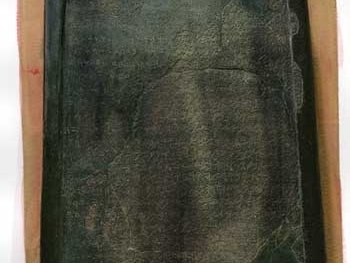
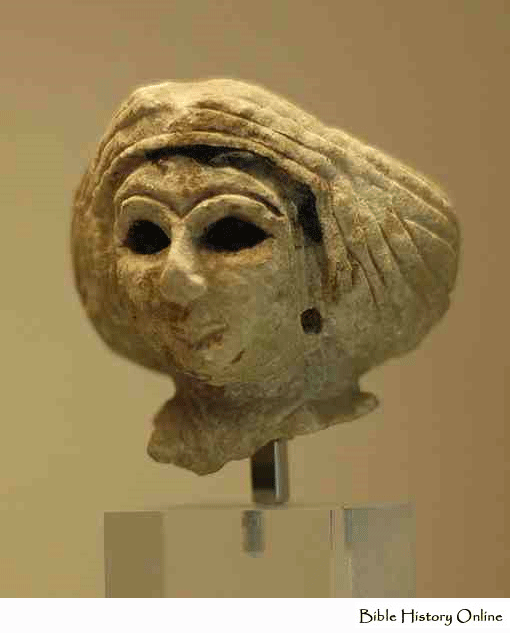
The Bible mentions Delilah as a woman of the valley of Sorek who Samson loved very much. The Philistines paid her a large sum of money to deceive Samson and entice him into revealing the secret of his great strength. After several attempts she finally discovered his secret. It was the length of his hair because of a vow that was made to God. When Samson went to sleep she had his head shaved and turned him over to the Philistines. They gouged out his eyes, threw him in prison, and later humiliated him.

Source:
Delilah A Philistine Harlot


Related Articles:

What Islands are in the Aegean Sea? post related image

What Islands are in the Aegean Sea?

In ancient Rome the “centurion” meant “captain of 100”, and the Roman centurion was captain over 100 foot soldiers in a legion. The centurion was loyal and courageous, beginning as a soldier in the army and working their way up the ranks. The...

What were the Classes of Citizenship in Ancient Rome? post related image

What were the Classes of Citizenship in Ancient Rome?

The classes of citizenship (civitus) and legal status in ancient Rome varied over the centuries. When Rome conquered a city the defeated people would fall into one of four classes. Citizens, Municipia, Latin Allies, and Italian Allies. Other areas m...

How did the ancient Greeks and Romans practice medicine and treat illnesses?

The ancient Greeks and Romans left a lasting legacy in the field of medicine, with their innovative theories and treatments that shaped the foundations of Western medicine. Drawing upon a combination of empirical observations, philosophical insights,...

What are the Historical Sources for the Second Temple?

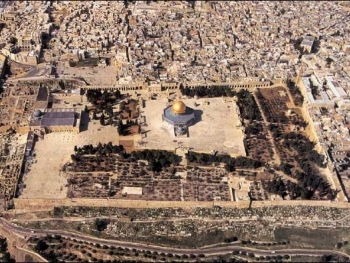
There are five primary sources for the study of the Second Temple in Jerusalem, the Temple of Herod. They are: The BibleThe Books of MaccabeesJosephus*The Dead Sea ScrollsThe Mishna** *War book 5, chapter 5; Antiquities book 15 chapter 11**tractates ...

What was a Roman Legion? post related image

What was a Roman Legion?

Augustus, the first emperor of Rome had in his empire 25 legions of approximately 6,000 soldiers each. A legion was formed of 10 Cohorts (540 men in each Cohort). Each Cohort was subdivided into 6 Centuries (90 men formed a Century), and each legion ...

Did Augustus Build a Temple at the Site of Caesarea Philippi? post related image

Did Augustus Build a Temple at the Site of Caesarea Philippi?

Yes there are remains of a Temple of Augustus at the site of ancient Paneas or Caesarea Philippi. This illustration depicts a Temple of Augustus. The temple at Caesarea Philippi would have been built in a similar style. Augustus was fascinated with t...

What Historical Sources do we have for the Life of Alexander the Great?

The five primary sources we have for the events in the life of Alexander are Diodorus Siculus, Quintus Curtius Rufus, Plutarch, Lucius Flavius Arrianus, and the Alexander Romance. “For I myself believe that there was at that time no race of mankind...

Where was the location of the Transfiguration? post related image

Where was the location of the Transfiguration?

Matthew 17:1 – After six days, Jesus took with him Peter, James, and John his brother, and brought them up into a high mountain by themselves. In the 4th century AD a tradition was established that Mount Tabor was the scene of the transfiguration a...

How did the Ancient Greeks and Romans view education and the role of philosophers?

Education and the role of philosophers held significant importance in the ancient Greek and Roman societies. In ancient Greece, education was highly valued, and it aimed to develop well-rounded individuals. Greek philosophers, such as Socrates, Plato...

What Weapons did the Roman Soldier Carry? post related image

What Weapons did the Roman Soldier Carry?

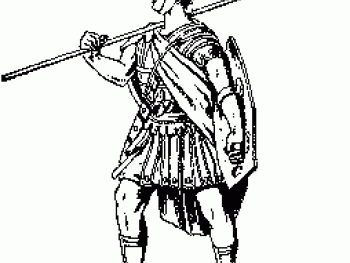
The weapons of a Roman solder included: the gladius (the short, straight, two-edged sword with which he would thrust rather than slash), and this he carried on a belt either from the shoulder or round the waist. He also carried the javelin “pilum...

What is significant about the Dead Sea?

The Dead Sea holds several significant aspects in biblical and historical contexts. Here are some key points: Geological and Natural Features: The Dead Sea is a saltwater lake located at the lowest elevation on Earth. Its high salt concentration make...

What was a Watchtower?

In the Bible, a watchtower, also known as a lookout or watchman's tower, was a raised structure used for surveillance and observation. It served as a strategic vantage point from which watchmen could keep watch over the surrounding area, looking out ...

Why is Augustus Also Called Octavian? post related image

Why is Augustus Also Called Octavian?

Augustus was born with the name Gaius Octavian on September 23, 63 B.C. His parents were C. Octavius and Atia, a niece of Julius Caesar, by his sister Julia. Source: Augustus Caesar...

What did the Crown of Thorns Symbolize?

In the Bible, the crown of thorns is mentioned in the account of Jesus' crucifixion. Matthew 27:29, Mark 15:17, and John 19:2 describe how the Roman soldiers twisted thorns into a crown and placed it on Jesus' head as a form of mockery and humiliatio...

What was an Alabaster Jar?

In the Bible, an alabaster jar refers to a type of container made from alabaster stone. Alabaster is a soft, white or translucent mineral often used in ancient times for crafting vessels or containers for various purposes. One notable mention of an a...

Who was Jupiter in Roman Mythology? post related image

Who was Jupiter in Roman Mythology?

In ancient Roman religion, Jupiter was the chief of the gods. The name “Jupiter” means “the best and greatest” (Optimus Maximus). He was identified with the Greek god Zeus. Jupiter was the spirit of the sky and worshiped as the god of thunder...

How was Jesus’ Name Written?

The name of Jesus, in its original language, was written in Hebrew as יֵשׁוּעַ (Yeshua) or יְהוֹשֻׁעַ (Yehoshua). In the New Testament, the name appears in Greek as Ἰησοῦς (Iēsous). The specific form used in the Bible depen...

Who were the Main Historical Sources for the Life of Nero? post related image

Who were the Main Historical Sources for the Life of Nero?

The main historical sources for the life of Nero were Tacitus Tacitus Publius Cornelius (55-120 A.D. approx.), Suetonius Svetonius Tranquillus (70-140 A.D. approx.), Cassius Dio Dion Cassius Cocceianus (155-235 A.D. approx.), Jewish and Christian Tra...


Read The Bible

About

Welcome to Free Bible: Unearthing the Past, Illuminating the Present! Step into a world where ancient history and biblical narratives intertwine, inviting you to explore the rich tapestry of human civilization.

Discover the captivating stories of forgotten empires, delve into the customs and cultures of our ancestors, and witness the remarkable findings unearthed by dedicated archaeologists.

Immerse yourself in a treasure trove of knowledge, where the past comes alive and illuminates our understanding of the present.

Join us on this extraordinary journey through time, where curiosity is rewarded and ancient mysteries await your exploration.

Recent posts