Did Tiberius Caesar Know Jesus was Being Crucified?

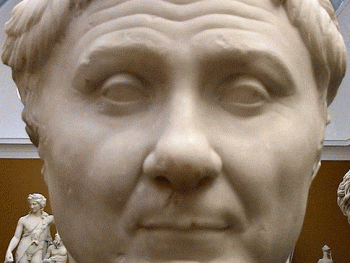
Did Tiberius Caesar Know Jesus was Being Crucified?... hero image

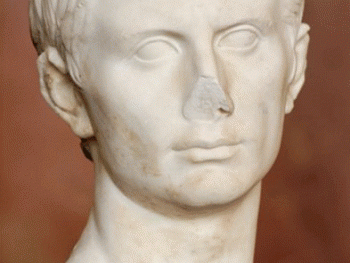
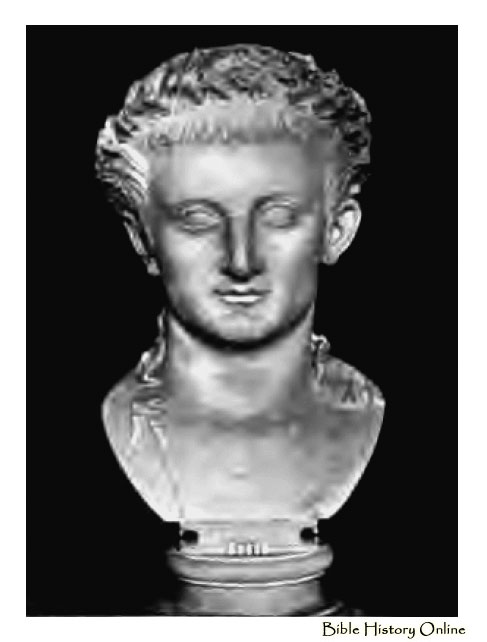
It is not known whether Tiberius had heard of Jesus, or knew about the crucifixion of Jesus. Word about Jesus and his miracles spread quickly throughout the Roman Empire, even to the Imperial Palace on Palatine Hill, but Tiberius had retired to his palace on the Island of Capri in 26 A.D.

Source:

Tiberius Caesar


Related Articles:

How did ancient Chinese society and culture differ from Western civilizations?

Ancient Chinese society and culture exhibited several notable differences from Western civilizations. Here are some key distinctions: Philosophical Traditions: While Western civilizations developed philosophical systems such as Greek philosophy and l...

What was a Watchtower?

In the Bible, a watchtower, also known as a lookout or watchman's tower, was a raised structure used for surveillance and observation. It served as a strategic vantage point from which watchmen could keep watch over the surrounding area, looking out ...

Why was Pompey Referred to as “The Great”? post related image

Why was Pompey Referred to as “The Great”?

Pompey was a military genius and his soldiers recognized this and referred to him as “Magnus” which means the great, thus the name Gnaeus Pompeius Magnus. Source: Pompey the Great...

What were the major trade routes and trading practices of the ancient world?

Trade played a vital role in connecting civilizations and fostering cultural exchange in the ancient world. From the bustling markets of Rome to the Silk Road that stretched across Asia, ancient trade routes facilitated the exchange of goods, ideas, ...

What were the major contributions of ancient Babylon to mathematics and astronomy?

The ancient city of Babylon, located in Mesopotamia, made significant contributions to the fields of mathematics and astronomy. With a keen interest in celestial observations and a sophisticated numerical system, the Babylonians developed groundbreak...

Do any Archaeological Discoveries Mention Israel? post related image

Do any Archaeological Discoveries Mention Israel?

The Moabite Stone was discovered in 1868 about 20 miles east of the Dead Sea at Moab. It was a black and blue basalt stone dating back to around 830 BC, discovered by a German Missionary named F.A. Klein. It contains an inscription that reads: “I M...

Why is the Arch of Titus Relief so Significant? post related image

Why is the Arch of Titus Relief so Significant?

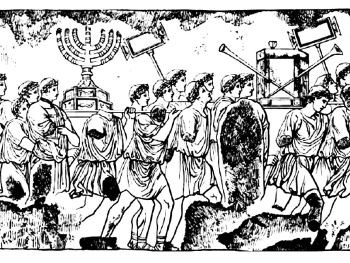
In 70 AD the Romans laid siege to Jerusalem and utterly destroyed and buried one of the greatest cities of the ancient world. This was all predicted by Jesus in the New Testament approximately 40 years prior. Source: Relief from the Arch of Titus ...

Why was Hadrian’s Arch Erected in Jordan?

Hadrian's Arch, also known as the Arch of Hadrian or the Triumphal Arch, is an ancient Roman monument located in Jerash, Jordan. It was erected during the reign of the Roman Emperor Hadrian in the 2nd century CE. While the Bible does not specifically...

Why is Augustus Also Called Octavian? post related image

Why is Augustus Also Called Octavian?

Augustus was born with the name Gaius Octavian on September 23, 63 B.C. His parents were C. Octavius and Atia, a niece of Julius Caesar, by his sister Julia. Source: Augustus Caesar...

Who was the Roman Emperor when Jesus was Born? post related image

Who was the Roman Emperor when Jesus was Born?

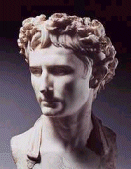
According to history the Emperor of Rome at the time of Jesus’ birth was Augustus. In 27 B.C., the Senate of Rome voted to give him the title Augustus, which means “the respected one.” He ruled the empire until 14 A.D. In the Bible Luke refers ...

Why were the Seven Hills of Rome Significant? post related image

Why were the Seven Hills of Rome Significant?

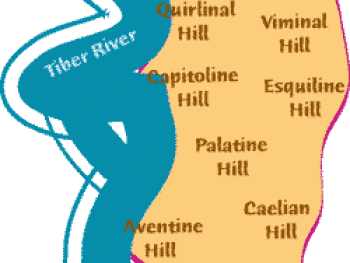
The seven hills of Rome were very noticeable in the landscape of the city of Rome. The hills were no higher than 60 yards, but they had steep slopes that rose above the flat marshland. Several small streams flowed between the seven hills. The names o...

What were the major achievements of the ancient Greeks in art and architecture?

The ancient Greeks made remarkable achievements in art and architecture, leaving a lasting impact on Western civilization. Some of their major accomplishments include: Sculpture: Greek sculpture reached unparalleled heights, with an emphasis on ideal...

What were the religious beliefs and practices of the ancient Egyptians?

The religious beliefs and practices of the ancient Egyptians were complex and deeply intertwined with their daily lives. Here are some key aspects: Polytheistic Belief: Ancient Egyptians believed in a pantheon of gods and goddesses who governed vario...

What were the major gods and goddesses worshipped in ancient Greece?

Ancient Greek mythology was rich with a pantheon of gods and goddesses, each associated with various domains, powers, and legends. Here are some of the major deities worshipped in ancient Greece: Zeus: The king of the gods and the ruler of Mount Olym...

What did the Arch of Titus Commemorate? post related image

What did the Arch of Titus Commemorate?

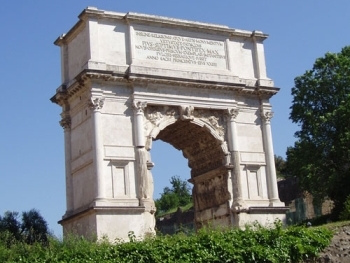
The Arch of Titus is one of Rome’s most famous monuments. It was built to commemorate the victories of Titus and Vespasian in the war against the Jews and their complete destruction in 70 AD. One wall relief inside the arch shows the spoils of the...

Did Augustus Build a Temple at the Site of Caesarea Philippi? post related image

Did Augustus Build a Temple at the Site of Caesarea Philippi?

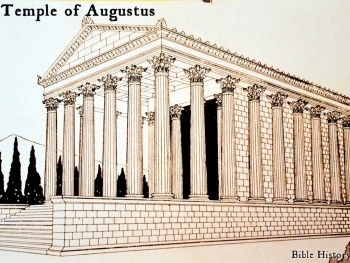
Yes there are remains of a Temple of Augustus at the site of ancient Paneas or Caesarea Philippi. This illustration depicts a Temple of Augustus. The temple at Caesarea Philippi would have been built in a similar style. Augustus was fascinated with t...

Was the Adriatic Sea a Place of Sudden Storms?

The Bible does not specifically mention the Adriatic Sea as a place of sudden storms. However, the Bible does contain accounts of storms and tempests occurring at sea in various locations, emphasizing the unpredictable and perilous nature of such eve...

What were the Primary Sources for Assyrian History? post related image

What were the Primary Sources for Assyrian History?

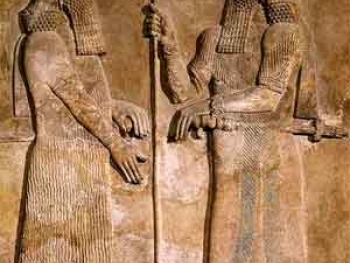
Scholars recognize that the primary sources for the study of ancient Assyria are the Assyrian Annals, the Assyrian Chronicles and Eponym Canon, The Assyrian King List, Assyrian Sculptures, and the Bible. The Assyrian Annals. The scribes of the chief ...


Read The Bible

About

Welcome to Free Bible: Unearthing the Past, Illuminating the Present! Step into a world where ancient history and biblical narratives intertwine, inviting you to explore the rich tapestry of human civilization.

Discover the captivating stories of forgotten empires, delve into the customs and cultures of our ancestors, and witness the remarkable findings unearthed by dedicated archaeologists.

Immerse yourself in a treasure trove of knowledge, where the past comes alive and illuminates our understanding of the present.

Join us on this extraordinary journey through time, where curiosity is rewarded and ancient mysteries await your exploration.
Recent posts