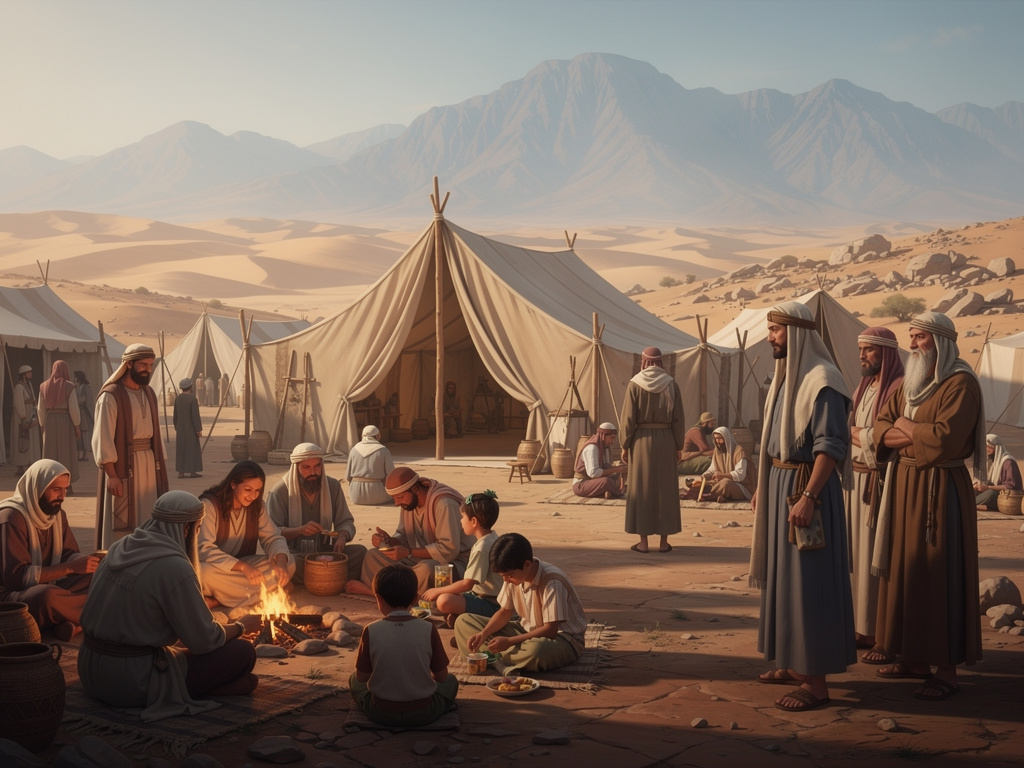
Why did Moses say bastards are condemned?

Why did Moses say bastards are condemned?... hero image

The idea that "bastards are condemned" is often associated with Deuteronomy 23:2 in the King James Version (KJV) of the Bible, which states:

"A bastard shall not enter into the congregation of the LORD; even to his tenth generation shall he not enter into the congregation of the LORD."

This verse has sparked significant debate, confusion, and even distress due to its harsh phrasing. To understand its meaning and context, let’s break it down:

1. What Does "Bastard" Mean in This Context?

  • The Hebrew word used here is מַמְזֵר (mamzer).
  • While the KJV translates it as "bastard," modern scholars interpret mamzer more specifically:
    • It likely refers to a child born from a forbidden union (e.g., incest, adultery, or a relationship prohibited by Mosaic Law, such as those listed in Leviticus 18 and 20).
    • It does not refer to children born out of wedlock in general or to modern-day single-parent families.

2. Why the Harsh Language?

  • The law in Deuteronomy 23:2 reflects the seriousness of preserving Israel’s covenant community.
  • The congregation of the LORD (קָהָל יְהוָה) was a sacred assembly, and participation in it was tied to ritual purity and obedience to God’s commands.
  • Forbidden unions were seen as violations of God’s covenant, threatening the spiritual integrity of Israel.

3. Was This a Permanent Condemnation?

  • The phrase "even to his tenth generation" is symbolic in Hebrew culture, often meaning "indefinitely" or "for a very long time."
  • However, this law was not absolute or eternal:
    • The Talmud (Jewish oral tradition) later debated whether a mamzer could ever be integrated into the community.
    • Ruth, a Moabite woman (another group initially excluded in Deuteronomy 23:3), became an ancestor of King David, showing that God’s redemptive plan could override exclusions.
    • The New Testament emphasizes grace and inclusion through Christ (e.g., Galatians 3:28: "There is neither Jew nor Greek, slave nor free, male nor female, for you are all one in Christ Jesus.").

4. Cultural and Historical Context

  • Ancient Near Eastern societies prioritized lineage and purity to maintain social order and religious identity.
  • Israel’s laws were designed to set them apart as God’s chosen people, distinct from neighboring cultures.
  • This law was not about personal worth but about protecting the covenant community’s holiness.

5. How Should We Interpret This Today?

  • Avoid literalism: The term "bastard" in the KJV is not equivalent to its modern, often pejorative meaning.
  • Focus on the principle: The law highlights the importance of obedience and holiness in God’s community, but it is fulfilled and transformed by Christ’s redemptive work.
  • Grace over legalism: The New Testament shifts the focus from exclusion based on lineage to inclusion based on faith (Ephesians 2:1122).

6. Practical Takeaway

  • This verse is not a condemnation of children born outside of marriage in the modern sense.
  • It reflects ancient Israel’s efforts to maintain covenant purity, but the Gospel ultimately transcends these boundaries.
  • For those struggling with feelings of exclusion or shame, the message of the New Testament is one of hope, redemption, and belonging in Christ.

Further Reading


Related Articles:

The New Revised Standard Version (NRSV): Aspects, Comparisons, Impact on Biblical Studies, and Differences from the NRSVue

The New Revised Standard Version (NRSV) is one of the most influential and widely used Bible translations in the English-speaking world. It was developed as an update to the Revised Standard Version (RSV) with the goal of incorporating contemporary s...

Exploring the Douay-Rheims Bible (DRA): Historical Aspects, Comparisons, and Influence

The Douay-Rheims Bible (DRA) stands as a pivotal text in the history of English Catholic translations. Originating from the late 16th and early 17th centuries, this translation reflects both the challenges of its time and the enduring nature of Catho...

What is the name of Ramallah in the Bible?

Ramala is not a commonly recognized name in the Bible. However, there are several biblical places that have been identified with Ramallah, including: Ramah (or Ramathaim-Zophim) is a town mentioned in the Old Testament. It's the birthplace of the pro...

Exploring Phillips’ Translation Style: A Historical Perspective and Comparison to Modern English Translations

J.B. Phillips’ translation of the New Testament, first published in 1958, represents a significant contribution to modern English Bible translations. Known for its dynamic and approachable style, Phillips’ work contrasts with other translations t...

Exploring the Jewish Publication Society’s JPS Tanakh (JUB): Word Usage and Comparison to Literal and Dynamic Equivalence Translations

The Jewish Publication Society's Tanakh (JUB), first published in 1962 and updated in 2004, is a significant English translation of the Hebrew Bible. It reflects the Jewish tradition and perspective on the Scriptures, differing from other translation...

The New Matthew Bible (NMB): Specific Aspects, Comparison with the King James Version, Impact on Biblical Studies, and Modernization Challenges

The New Matthew Bible (NMB) is a modern English translation based on the 16th-century Matthew Bible, originally compiled by William Tyndale and later revised by John Rogers. The NMB represents an effort to return to the roots of early modern English ...

The International Standard Version (ISV): Historical Overview, Comparison, and Impact on Biblical Studies

The International Standard Version (ISV) is a relatively recent Bible translation that has gained attention for its modern language, attention to linguistic detail, and use of ancient manuscripts, including the Dead Sea Scrolls. This post explores sp...

Exploring the Differences Between The Living Bible (TLB) and the New Living Translation (NLT): Impact of Paraphrases on Bible Study

The Living Bible (TLB) and the New Living Translation (NLT) are two prominent English translations of the Bible that have made significant contributions to the accessibility and comprehension of Scripture. While both versions aim to present the Bible...

The Wycliffe Bible: Translation Methodology, the Lollard Movement, and the Church’s Response post related image

The Wycliffe Bible: Translation Methodology, the Lollard Movement, and the Church’s Response

The Wycliffe Bible, named after John Wycliffe, represents a monumental effort in the history of biblical translation and English religious reform. Created in the late 14th century, this translation marks the first known attempt to render the entire B...

Comparing the NRSV and NRSVA: Specific Differences, Historical Context, and Comparison to British English Bible Translations

The New Revised Standard Version (NRSV) and the New Revised Standard Version Anglican (NRSVA) are both translations of the Bible that stem from the same base text but cater to different denominational traditions. While the NRSV is widely used across ...

How do we discern and apply biblical principles to contemporary ethical issues?

Discerning and applying biblical principles to contemporary ethical issues requires careful study, reflection, and reliance on the guidance of the Holy Spirit. Here are some steps to help in this process: Study God's Word: Immerse yourself in the stu...

What is the significance of the resurrection of Jesus Christ?

The resurrection of Jesus Christ holds immense significance in the Christian faith. Here are some key aspects of its significance: Victory Over Death: The resurrection demonstrates Jesus' victory over sin and death. Through His resurrection, Jesus co...

How do we cultivate a deeper relationship with God through prayer and meditation?

Cultivating a deeper relationship with God through prayer and meditation is a lifelong journey of seeking His presence and growing in intimacy with Him. Here are some key practices that can help in this endeavor: Set Aside Regular Time: Dedicate spec...

How do we understand the concept of sin and its consequences?

Understanding the concept of sin and its consequences is foundational in the Christian faith. Here are some key aspects to consider: Definition of Sin: Sin is the willful disobedience or rebellion against God's perfect and holy standards. It encompas...

What is the significance of the Ten Commandments?

The Ten Commandments hold significant importance in Judeo-Christian tradition as a foundational moral and ethical code. They were given by God to Moses on Mount Sinai and serve as guidelines for righteous living and harmonious relationships with God ...

What does biblical archaeologist said about hieroglyphics?

Biblical archaeologists have a particular interest in deciphering hieroglyphics because of their relevance to understanding ancient Egypt and its connections with events and people mentioned in the Bible. Hieroglyphics are the writing system of ancie...

What is the biblical understanding of justice and righteousness?

In the Bible, justice and righteousness are intertwined concepts that reflect God's character and standards for human conduct. Here is a biblical understanding of justice and righteousness: 1. Justice: In the Bible, justice refers to the establishmen...

Theological Implications of the BRG Bible’s Color-Coding System: A Comparative Analysis

The BRG Bible, also known as the Blue Red Green Bible, introduces a unique color-coding system designed to aid readers in understanding and interpreting the text. This innovative approach sets it apart from traditional Bible translations and other vi...


Read The Bible

About

Welcome to Free Bible: Unearthing the Past, Illuminating the Present! Step into a world where ancient history and biblical narratives intertwine, inviting you to explore the rich tapestry of human civilization.

Discover the captivating stories of forgotten empires, delve into the customs and cultures of our ancestors, and witness the remarkable findings unearthed by dedicated archaeologists.

Immerse yourself in a treasure trove of knowledge, where the past comes alive and illuminates our understanding of the present.

Join us on this extraordinary journey through time, where curiosity is rewarded and ancient mysteries await your exploration.

Recent posts