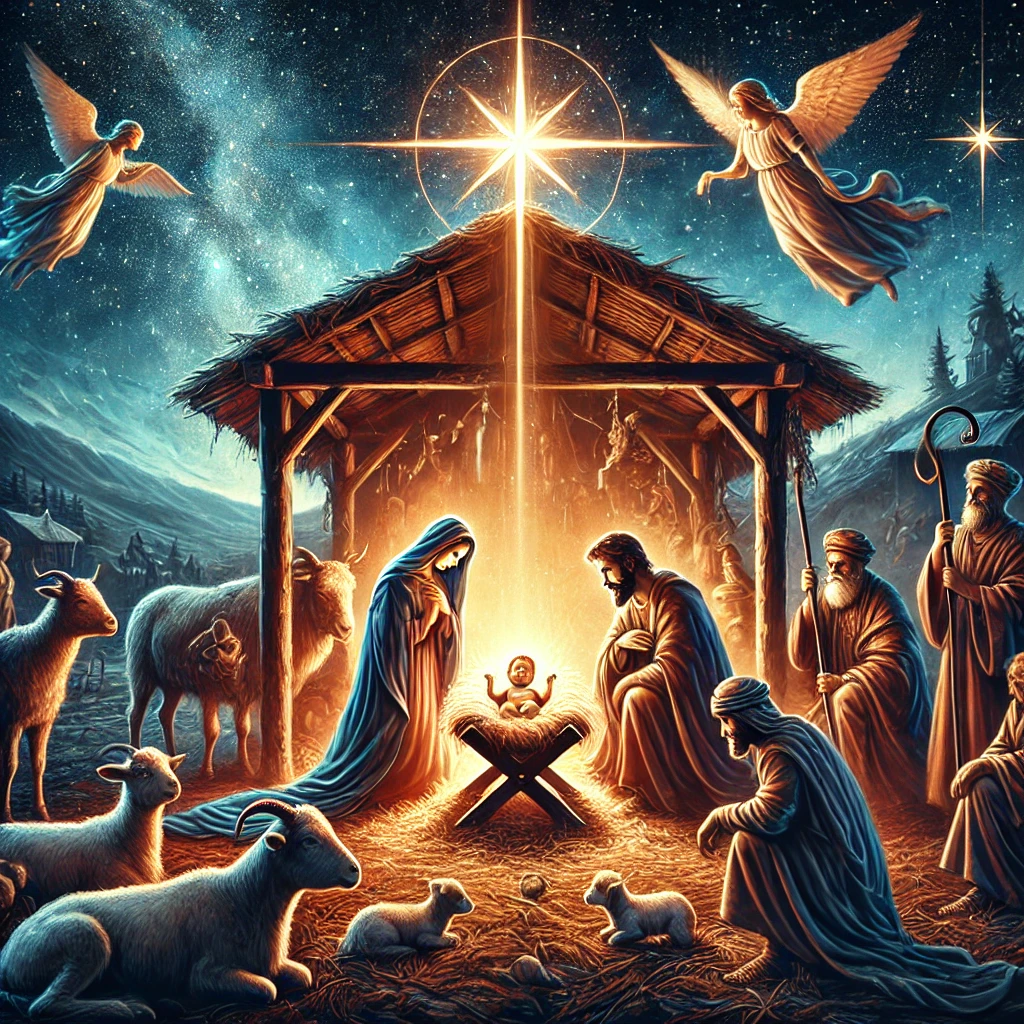
Why Do Christians Celebrate Christmas?

Why Do Christians Celebrate Christmas?... hero image

Christmas is one of the most widely celebrated holidays in the world, bringing together people of all backgrounds to commemorate the birth of Jesus Christ. But why exactly do Christians celebrate Christmas? Let’s explore the origins, biblical basis, and spiritual significance of this cherished holiday.

1. The Biblical Foundation for Christmas

Although the Bible does not specifically command the celebration of Christmas, the story of Jesus’ birth is central to the Christian faith. The accounts of Jesus’ birth are found in the Gospels of Matthew (Matthew 1:18–25) and Luke (Luke 2:1–20). These passages describe how Jesus, the Son of God, was born to the Virgin Mary in Bethlehem, fulfilling prophecies from the Old Testament.

  • Prophecy Fulfilled:
    The prophet Isaiah foretold the birth of the Messiah, saying:
    “For to us a child is born, to us a son is given, and the government will be on his shoulders. And he will be called Wonderful Counselor, Mighty God, Everlasting Father, Prince of Peace” (Isaiah 9:6).
  • The Birth of the Savior:
    The angel announced to the shepherds:
    “Do not be afraid. I bring you good news that will cause great joy for all the people. Today in the town of David a Savior has been born to you; he is the Messiah, the Lord” (Luke 2:10–11).

The celebration of Christmas centers around the joy of Christ's birth and the hope He brings to the world.

2. Historical Origins of Christmas

The earliest recorded celebration of Christmas took place in 336 AD in Rome during the reign of Emperor Constantine. December 25 was chosen as the date, possibly to coincide with existing Roman festivals such as Saturnalia and the celebration of Sol Invictus (the "Unconquered Sun"). By placing the birth of Christ on this date, early Christians sought to redirect pagan celebrations toward honoring Jesus as the true "Light of the World" (John 8:12).

The tradition of celebrating Christmas spread throughout the Christian world and took on different cultural expressions over the centuries.

3. The Spiritual Significance of Christmas

For Christians, Christmas is more than a historical or cultural celebration—it is a time of profound spiritual reflection and gratitude.

  • The Incarnation:
    Christmas celebrates the miracle of the Incarnation—God becoming flesh in the person of Jesus Christ. As John 1:14 states:
    “The Word became flesh and made his dwelling among us. We have seen his glory, the glory of the one and only Son, who came from the Father, full of grace and truth.”
  • The Gift of Salvation:
    Jesus’ birth marks the beginning of God’s plan to redeem humanity from sin. His humble arrival in a manger symbolizes His mission to save all people, regardless of status or background.
  • A Season of Hope and Joy:
    The message of Christmas is one of hope, peace, and joy. It reminds Christians of God’s love and His promise of eternal life through Jesus Christ.

4. Christmas Traditions and Their Meanings

Over time, various traditions have become associated with Christmas. Many of these customs have symbolic meanings tied to Christian faith:

  • Nativity Scenes:
    These displays of the manger scene help believers reflect on the humility of Christ’s birth.
  • Christmas Trees:
    Evergreen trees, which remain green year-round, symbolize eternal life through Jesus.
  • Gifts:
    The giving of gifts reflects the gifts brought to Jesus by the Magi (Matthew 2:11) and God’s ultimate gift of His Son to humanity (John 3:16).
  • Carols and Hymns:
    Songs like “O Holy Night” and “Silent Night” celebrate the miracle of Jesus’ birth.

5. Why Christians Continue to Celebrate Christmas

Christians celebrate Christmas to honor and remember the birth of Jesus, who is central to their faith. It is a time to reflect on God’s love, share the good news of the gospel, and gather with loved ones in worship and fellowship.

Beyond the festivities, Christmas reminds believers of the hope that Christ brought into a broken world. It is an opportunity to embody the message of peace, generosity, and goodwill proclaimed by the angels on that first Christmas night:
“Glory to God in the highest heaven, and on earth peace to those on whom his favor rests” (Luke 2:14).

Christmas is a celebration of God’s love made manifest in the birth of Jesus Christ. For Christians, it is not just a holiday but a sacred time to reflect on the profound truths of their faith. As you gather around the tree, exchange gifts, or sing carols, remember the true reason for the season: the Savior’s birth and the hope He brings to the world.

Merry Christmas!


Spirituality Spiritual Lessons Spiritual Revival Spiritual Journey Spiritual Wisdom Bible History Spiritual Connection Spiritual Guidance Spiritual Growth Spiritual Significance Spiritual symbols in Scripture spiritual well-being Spiritual Map Christmas Christians Christmas and Jesus Biblical meaning Birth of Jesus Christ Christmas traditions Prophecy Prophecy of Jesus’ birth Christian holidays Christmas in the Bible History of Christmas

Related Articles:

How do we understand the concept of sin and its consequences?

Understanding the concept of sin and its consequences is foundational in the Christian faith. Here are some key aspects to consider: Definition of Sin: Sin is the willful disobedience or rebellion against God's perfect and holy standards. It encompas...

A Detailed Historical Analysis of the American Standard Version (ASV): Comparison to the King James Version, Influence on Later Translations, and Evaluation of Strengths and Weaknesses

The American Standard Version (ASV), first published in 1901, represents a pivotal moment in the history of English Bible translations. Designed as an update and improvement upon the King James Version (KJV), the ASV aimed to offer a more accurate an...

What is the Incarnation? post related image

What is the Incarnation?

Hebrews 2:14 Forasmuch then as the children are partakers of flesh and blood, Jesus also himself likewise took part of the same; that through death he might destroy him that had the power of death, that is, the devil; The subject of the incarnation i...

The Orthodox Jewish Bible (OJB): Specific Aspects, Comparison to Other Jewish Translations, Impact on Jewish-Christian Dialogue, and Challenges of Yiddish and Hasidic Expressions

The Orthodox Jewish Bible (OJB) is a significant translation within the Jewish community, created to address the needs of Orthodox Jewish readers seeking a comprehensive and faithful English rendering of the Hebrew Scriptures. Published in 2002 by Ra...

The New King James Version (NKJV): Specific Aspects, Comparison to the KJV, Impact on Bible Study, and Theological Distinctives

The New King James Version (NKJV) represents a significant evolution from the King James Version (KJV), which has long been esteemed for its majestic language and profound impact on English-speaking Christianity. Published in 1982, the NKJV sought to...

How do we navigate and respond to biblical teachings that may be challenging or difficult?

Navigating and responding to challenging or difficult biblical teachings requires careful discernment, humility, and a sincere desire to seek God's truth. Here are some principles to consider: Seek God's Guidance: Approach challenging biblical teachi...

How do we reconcile apparent contradictions or discrepancies in the Bible?

When encountering apparent contradictions or discrepancies in the Bible, it's important to approach them with a balanced and thoughtful perspective. Here are a few principles to consider in reconciling such differences: Contextual Understanding: Many...

The International Children’s Bible (ICB): Simplifying Complex Biblical Concepts and Strategies for Children’s Ministry

The International Children’s Bible (ICB) is a unique translation aimed at making the Bible accessible and understandable for children. This post explores specific examples of how the ICB simplifies complex biblical concepts, making them comprehensi...

What are the key lessons and themes in the book of Proverbs?

The book of Proverbs is a rich source of wisdom literature in the Bible, offering valuable lessons and insights for practical living. Here are some key lessons and themes found within its pages: The Fear of the Lord: The book of Proverbs repeatedly e...

The Holman Christian Standard Bible (HCSB) and Christian Standard Bible (CSB): A Detailed Historical Post

The Holman Christian Standard Bible (HCSB) and its successor, the Christian Standard Bible (CSB), represent significant efforts in modern Bible translation. These translations aim to provide a balance between accuracy and readability, making them sui...

What is Grace? post related image

What is Grace?

"For by grace are ye saved through faith; and that not of yourselves: [it is] the gift of God: Not of works, lest any man should boast." Ephesians 2:8-9The concept of grace was not only foreign in the ancient world, even in today's world nearly all r...

What is the importance of the Great Commission in spreading the Gospel?

The Great Commission is a pivotal commandment given by Jesus to His disciples before His ascension into heaven. It holds immense importance in spreading the Gospel and advancing the Kingdom of God. Here are key points regarding its significance: Divi...

An In-Depth Examination of the New Catholic Bible (NCB): Aspects, Comparisons with NABRE, Impact on Catholic Liturgy, and Theological Distinctives

The New Catholic Bible (NCB) is a significant English translation that caters to the needs of the Catholic community by providing a modern yet faithful representation of the Scriptures. First published in 1965, the NCB has undergone various revisions...

What does the Bible say about social justice and caring for the marginalized?

The Bible consistently emphasizes the importance of social justice and caring for the marginalized within society. Here are some key teachings and principles from Scripture: Love Your Neighbor: The command to love one's neighbor is central to biblica...

What is the biblical perspective on suffering and trials?

The Bible provides a profound perspective on suffering and trials, offering comfort, guidance, and hope amidst difficult circumstances. Here are key principles from a biblical perspective: Suffering is a Reality in a Fallen World: The Bible acknowled...

What is the role of community and fellowship in the Christian faith?

Community and fellowship play a vital role in the Christian faith, providing believers with a supportive and nurturing environment for spiritual growth. Here are some key aspects of their significance: Mutual Edification: Community and fellowship cre...

How do we understand the concept of eternal life and the afterlife?

Understanding the concept of eternal life and the afterlife is a deep and profound topic. Here are some key insights from the Bible that can help us grasp this concept: Eternal Life as a Gift: The Bible teaches that eternal life is a gift from God, m...

An In-Depth Examination of the NASB1995: Key Aspects, Comparison to the Original NASB, Impact on Bible Study, and Theological Distinctives

The New American Standard Bible (NASB) is renowned for its commitment to accuracy and literalness in translation. First published in 1963, the NASB has undergone several updates to refine its language and address advances in biblical scholarship. The...


Read The Bible

About

Welcome to Free Bible: Unearthing the Past, Illuminating the Present! Step into a world where ancient history and biblical narratives intertwine, inviting you to explore the rich tapestry of human civilization.

Discover the captivating stories of forgotten empires, delve into the customs and cultures of our ancestors, and witness the remarkable findings unearthed by dedicated archaeologists.

Immerse yourself in a treasure trove of knowledge, where the past comes alive and illuminates our understanding of the present.

Join us on this extraordinary journey through time, where curiosity is rewarded and ancient mysteries await your exploration.

Recent posts