Ancient World Questions. Uncover Historical Insights and Biblical Connections
Delve into our curated list of questions about the ancient world, exploring historical insights and their biblical connections. Perfect for history buffs and Bible scholars alike. Discover the answers today!
How did the Ancient Greeks and Romans view education and the role of philosophers?
Education and the role of philosophers held significant importance in the ancient Greek and Roman societies. In ancient Greece, education was highly valued, and it aimed to develop well-rounded individuals. Greek philosophers, such as Socrates, Plato...
What were the major achievements of the ancient Greeks in art and architecture?
The ancient Greeks made remarkable achievements in art and architecture, leaving a lasting impact on Western civilization. Some of their major accomplishments include: Sculpture: Greek sculpture reached unparalleled heights, with an emphasis on ideal...
How did ancient Egyptians mummify their dead?
Ancient Egyptians had a complex and elaborate process of mummification to preserve the bodies of the deceased for the afterlife. The process involved several steps: Removal of organs: The embalmers would first remove the internal organs, except for t...
What were the main causes of the fall of the Roman Empire?
The fall of the Roman Empire was a complex event with multiple contributing factors. Some of the main causes include: Internal Decay and Political Instability: The empire faced a decline in effective leadership, political instability, and corruption ...
When did Jerusalem become the Capital of Israel?
Around 1000 BC David became king over Israel and conquered the Jebusites and stormed their fortress on Mount Zion (1 Sam. 5:5-9). Jerusalem became his home and the capital of his kingdom. He brought the Ark of the Covenant to the city and danced befo...
Where did the Israelites Cross the Red Sea?
According to the biblical account in Exodus 14, the Israelites crossed the Red Sea during their escape from Egypt. When they reached the shores of the sea, Moses stretched out his hand, and God caused a strong east wind to blow all night, parting the...
Where was Mesopotamia?
Mesopotamia, mentioned in the Bible, refers to an ancient region located in present-day Iraq and parts of Syria and Turkey. The term "Mesopotamia" means "land between rivers" in Greek, as the region is situated between the Tigris and Euphrates rivers...
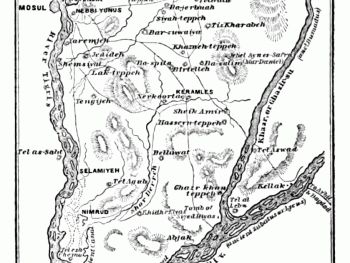
Where was the land of Assyria located?
The land of ancient Assyria was located in the far north of the Tigris river near modern Mosul. In their earliest history Assyria was a small territory on the left bank of the northern Tigris River. Over time their borders extended to the area be...
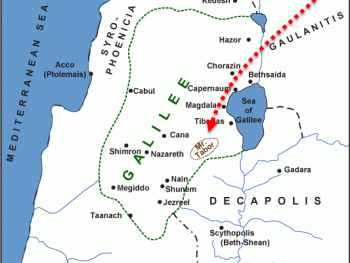
Where was the location of the Transfiguration?
Matthew 17:1 – After six days, Jesus took with him Peter, James, and John his brother, and brought them up into a high mountain by themselves. In the 4th century AD a tradition was established that Mount Tabor was the scene of the transfiguration a...
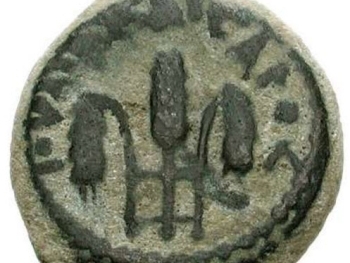
Who Appointed Pontius Pilate Procurator of Judea?
Only the Jewish historian Josephus provides us with what little information is known about Pilate’s life before 26 A.D. when Tiberius Caesar appointed him procurator of Judea. The sketchy information suggests that Pilate was probably an Italian bor...
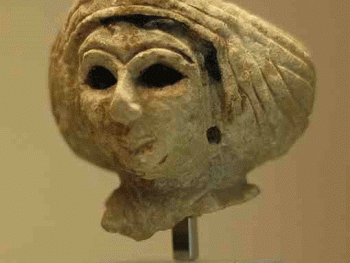
Who Was Delilah?
The Bible mentions Delilah as a woman of the valley of Sorek who Samson loved very much. The Philistines paid her a large sum of money to deceive Samson and entice him into revealing the secret of his great strength. After several attempts she finall...
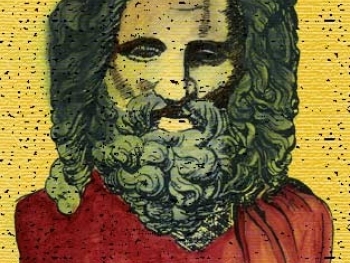
Who was Jupiter in Roman Mythology?
In ancient Roman religion, Jupiter was the chief of the gods. The name “Jupiter” means “the best and greatest” (Optimus Maximus). He was identified with the Greek god Zeus. Jupiter was the spirit of the sky and worshiped as the god of thunder...
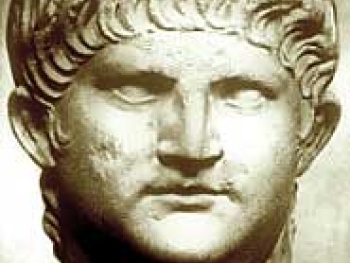
Who were the Main Historical Sources for the Life of Nero?
The main historical sources for the life of Nero were Tacitus Tacitus Publius Cornelius (55-120 A.D. approx.), Suetonius Svetonius Tranquillus (70-140 A.D. approx.), Cassius Dio Dion Cassius Cocceianus (155-235 A.D. approx.), Jewish and Christian Tra...
Who Were the Main Powers in Italy Before the Roman Empire?
The main powers in ancient Rome were Carthage, Greece, and Etrura. The Italian Peninsula is located right in the heart of the Mediterranean Sea. Rome is located right in the heart of Italy on a large plain known as Latium. Source: Latium and Geo...
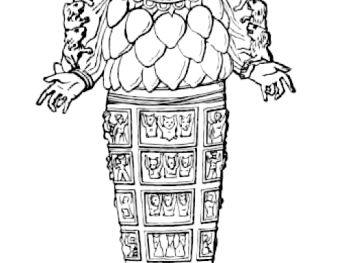
Why Did the Goddess Diana have so many Breasts?
In the Temple of Artemis also referred to as Diana the statue of the Roman goddess was depicted as covered entirely with breasts. This is because Diana was the goddess of fertility, and the multi-breasts were denoting fertility, nourishing the living...
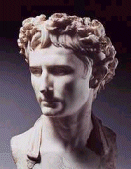
Why is Augustus Also Called Octavian?
Augustus was born with the name Gaius Octavian on September 23, 63 B.C. His parents were C. Octavius and Atia, a niece of Julius Caesar, by his sister Julia. Source: Augustus Caesar...
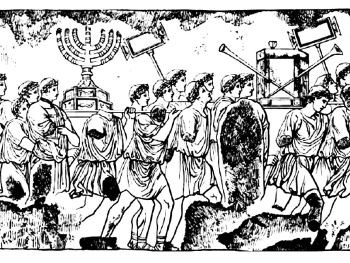
Why is the Arch of Titus Relief so Significant?
In 70 AD the Romans laid siege to Jerusalem and utterly destroyed and buried one of the greatest cities of the ancient world. This was all predicted by Jesus in the New Testament approximately 40 years prior. Source: Relief from the Arch of Titus ...
Why was Hadrian’s Arch Erected in Jordan?
Hadrian's Arch, also known as the Arch of Hadrian or the Triumphal Arch, is an ancient Roman monument located in Jerash, Jordan. It was erected during the reign of the Roman Emperor Hadrian in the 2nd century CE. While the Bible does not specifically...
About
Welcome to Free Bible: Unearthing the Past, Illuminating the Present! Step into a world where ancient history and biblical narratives intertwine, inviting you to explore the rich tapestry of human civilization.
Discover the captivating stories of forgotten empires, delve into the customs and cultures of our ancestors, and witness the remarkable findings unearthed by dedicated archaeologists.
Immerse yourself in a treasure trove of knowledge, where the past comes alive and illuminates our understanding of the present.
Join us on this extraordinary journey through time, where curiosity is rewarded and ancient mysteries await your exploration.
Recent posts
-

Why the AI Subscription Model Is Broken (And What Comes Next)
There's a pricing model quietly draining the budgets of every serious AI user, and almost nobody is talking about it directly.It goes like this: a new AI tool launches. It's genuinely useful. You subscribe. A few months later, another tool launches that does something the first one can't. You subscribe... -

Walk in Faith and Health: Discover Qozgal, the Free Step Challenge App Inspired by Ancient Journeys
Walking was an important part of people's lives in both ancient times and in the Bible, as the Israelites walked through the wilderness for 40 years or Jesus walked around Galilee. Today https://qozgal.app/en/ is taking that sense of movement and purpose to the modern world, making every step a chance... -

Are You Tired of Not Knowing Where to Find It in the Bible? This Free Resource Solves That
Let me ask you something honest.How many times have you been reading the Bible, or sitting in a church service, or having a conversation about faith - and you knew, with complete certainty, that the Bible had something important to say about the topic at hand - but you simply... -

Personalized Memorial Ideas to Honor a Loved One
Grief is a landscape with no map, a vast and quiet territory where we are left to wander after a profound loss. When someone who anchored our lives, shaped our worldview, and filled our days is no longer physically present, the fundamental human instinct is to build an anchor of... -

The Rise of Christianity in the First Century: A Historical Perspective
The first century CE was a transformative period for Christianity. What began as a small Jewish sect in Roman-occupied Judea rapidly evolved into a widespread religious movement. The teachings of Jesus Christ, the missionary journeys of Paul, and the organizational efforts of early Christian leaders laid the foundation for a...
Main Menu
- Ancient Assyrian Social Structure
- Ancient Babylonia
- Ancient Canaan During the Time of Joshua
- Ancient History Timeline
- Ancient Oil Lamps
- Antonia Fortress
- Archaeology of Ancient Assyria
- Assyria and Bible Prophecy
- Augustus Caesar
- Background Bible Study
- Bible
- Biblical Geography
- Fallen Empires - Archaeological Discoveries and the Bible
- First Century Jerusalem
- Glossary of Latin Words
- Herod Agrippa I
- Herod Antipas
- Herod the Great
- Herod's Temple
- High Priest's in New Testament Times
- Jewish Literature in New Testament Times
- Library collection
- Map of David's Kingdom
- Map of the Divided Kingdom - Israel and Judah
- Map of the Ministry of Jesus
- Matthew Henry Bible Commentary
- Messianic Prophecy
- Nero Caesar Emperor
- Online Bible Maps
- Paul's First Missionary Journey
- Paul's Second Missionary Journey
- Paul's Third Missionary Journey
- Pontius Pilate
- Questions About the Ancient World
- Tabernacle of Ancient Israel
- Tax Collectors in New Testament Times
- The Babylonian Captivity
- The Black Obelisk of Shalmaneser
- The Books of the New Testament
- The Court of the Gentiles
- The Court of the Women in the Temple
- The Destruction of Israel
- The Fall of Judah with Map
- The History Of Rome
- The Incredible Bible
- The Jewish Calendar in Ancient Hebrew History
- The Life of Jesus in Chronological Order
- The Life of Jesus in Harmony
- The Names of God
- The New Testament
- The Old Testament
- The Passion of the Christ
- The Pharisees
- The Sacred Year of Israel in New Testament Times
- The Samaritans
- The Scribes
Ancient Questions
- How Did the Ancient Sun Dial Work?
- What is the Pantheon?
- How did the ancient Mayans develop their sophisticated calendar system?
- How did the ancient Romans manage their water supply and sewage systems?
- Where was the land of Assyria located?
- What was a Roman Centurion?
- What is the Extent of the Old Testament World?
- Why was Pompey Referred to as “The Great”?
- Who was the Roman Emperor when Jesus was Born?
- Where did the Israelites Cross the Red Sea?
Bible Study Questions
- An In-Depth Analysis of the New English Translation (NET): Aspects, Comparisons, Impact, and Implications for Bible Interpretation
- What is Grace?
- The Voice Bible: Specific Aspects, Comparison to Other Paraphrases, Impact on Bible Study, and Theological Distinctives
- What does the Bible say about social justice and caring for the marginalized?
- What is the biblical perspective on the nature of God’s love and mercy?
- The Use of Divine Names in the Names of God Bible (NOG): A Comparative Analysis
- The 400-Year Prophecy: Unpacking Genesis 15 and the Journey of a People
- What are the different covenants in the Bible and their significance?
- The Orthodox Jewish Bible (OJB): Specific Aspects, Comparison to Other Jewish Translations, Impact on Jewish-Christian Dialogue, and Challenges of Yiddish and Hasidic Expressions
- Exploring the New Revised Standard Version Catholic Edition (NRSVCE): Aspects, Comparisons, Impact on Liturgy, and Theological Distinctives